

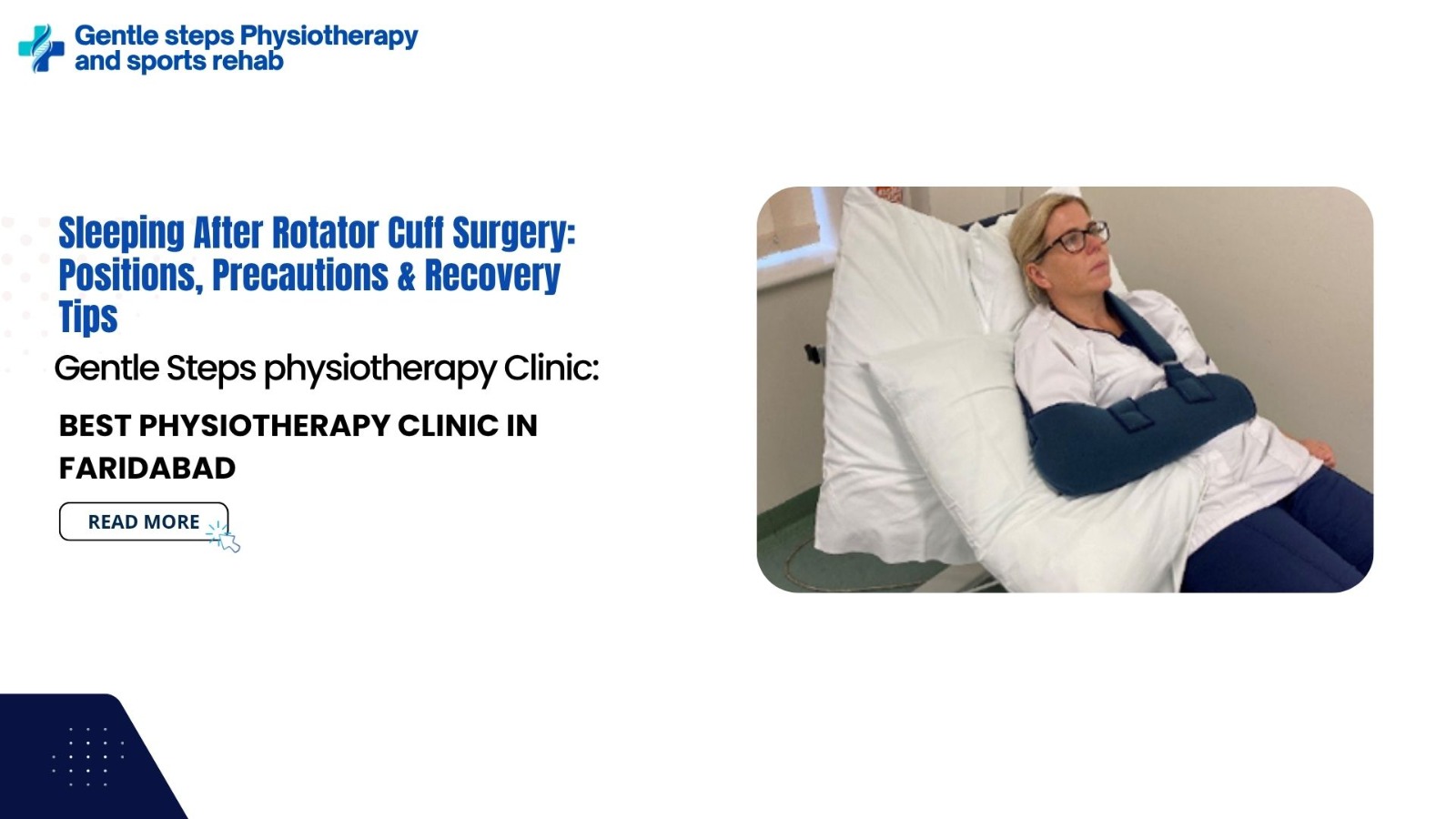
Sleep can become surprisingly difficult after rotator cuff surgery. Shoulder pain, swelling, stiffness, and the need to protect the repaired tendon can make finding a comfortable sleeping position challenging.
Many patients ask: “How should I sleep after rotator cuff surgery?”
The answer depends on the type of repair, the surgeon’s instructions, and your stage of recovery. However, some general principles can make sleeping safer and more comfortable.
After surgery, the shoulder needs time to heal. Pain may increase when you accidentally roll onto the operated side or move your arm during sleep.
Common reasons for disturbed sleep include:
Poor sleep can also make daytime fatigue and pain feel worse, so improving sleep is an important part of recovery.
For many patients, lying on the back is the easiest position during the early recovery period.
Keep the operated arm supported according to your surgeon’s instructions. A pillow or appropriate support can help prevent the arm from falling into an uncomfortable position.
You can also place pillows around your body to reduce the chance of accidentally rolling onto the operated shoulder.
Some patients find sleeping completely flat uncomfortable.
A semi-reclined position can reduce pressure on the shoulder and may make getting in and out of bed easier.
Options may include:
The goal is comfort while keeping the operated shoulder protected.
Direct pressure on the surgical shoulder can increase discomfort and may interfere with the protection required during the healing phase.
Avoid sleeping directly on the operated side until your surgeon or physiotherapist confirms that it is appropriate.
Side sleeping may eventually become possible, but the timing varies between patients.
If you are permitted to sleep on your non-operated side, your operated arm should be supported according to your rehabilitation instructions.
Do not assume that because the shoulder feels better, side sleeping is automatically safe. Tendon healing takes time.
In many rotator cuff repairs, patients are instructed to wear a sling or immobilizer for a specific period, including during sleep.
However, do not change your sling-wearing schedule without discussing it with your surgeon or rehabilitation professional.
The exact duration depends on factors such as:
Your surgeon’s post-operative protocol should always take priority.
During the early stages of recovery:
A comfortable sleeping position should protect the repair rather than simply reduce pain.
Getting out of bed can put unexpected stress on the shoulder.
Instead of pushing yourself up using the operated arm, use your legs and the non-operated arm as appropriate.
Move slowly and avoid sudden pulling or twisting movements.
If you are unsure about how to get in and out of bed safely, ask your physiotherapist to demonstrate the movement.
There is no single timeline that applies to everyone.
Recovery depends on the surgical procedure and the surgeon’s rehabilitation protocol. Some patients gradually return to their preferred sleeping position as healing progresses, while others require longer protection.
Feeling less pain does not necessarily mean the tendon has completely healed.
That is why returning to normal sleeping positions, gym exercises, lifting, or sports should be based on your rehabilitation progress rather than pain alone.
Post-operative physiotherapy is an important part of recovery.
Depending on the stage of rehabilitation, treatment may focus on:
Protection → Pain management → Mobility → Muscle activation → Strength → Functional training → Return to activity
The progression should be individualized. Aggressive exercises too early can be inappropriate, while avoiding movement for too long can contribute to stiffness and weakness.
Contact your surgical team if you experience symptoms that are unusual or worsening, such as:
Do not try to diagnose a post-operative complication yourself.
Sleeping after rotator cuff surgery can be difficult, but the right positioning and precautions can make recovery more comfortable.
For most patients, protecting the surgical repair is more important than finding the perfect sleeping position. Follow your surgeon’s restrictions, use appropriate support, and progress your rehabilitation gradually.
If you have undergone rotator cuff surgery and are unsure about shoulder movement, exercises, sleeping positions, or your return to daily activities, a physiotherapy assessment can help you understand the next stage of your rehabilitation.
At Gentle Steps Physiotherapy and Sports Rehab, we provide structured rehabilitation for post-operative shoulder conditions, including rotator cuff repair.
Location: Near SRS Royal Hills, near Narayana School, SRS Pearl, Sector 87, Neharpar, Faridabad, Haryana 121007
Specialized Rehabilitation: Rotator Cuff Rehab | Shoulder Physiotherapy | Sports Physiotherapy | Post-Operative Rehabilitation
This article provides general educational information. Your surgeon’s specific post-operative instructions should take priority because rehabilitation protocols differ between surgeries and patients.
