

By Dr. Varun Saini
Senior Sports Physiotherapist
Gentle Steps Physiotherapy & Sports Rehab, Sector 87, Faridabad
When people experience long-term pain, tendon injuries, or sports-related problems, they often wonder which treatment option is best for their recovery. One common question is: “Is Shockwave Therapy better than traditional physiotherapy?”
The answer depends on your condition, the cause of your symptoms, and your rehabilitation goals. At Gentle Steps Physiotherapy & Sports Rehab , Sector 87, Faridabad, we combine advanced treatment technologies with personalized physiotherapy programs to provide a comprehensive approach to recovery.
Traditional physiotherapy focuses on improving pain, movement, strength, flexibility, and functional ability through a combination of hands-on treatment and therapeutic exercise.
Depending on your condition, treatment may include:
The primary goal is not simply to reduce pain but to improve physical function, address contributing factors, and help reduce the risk of future problems.
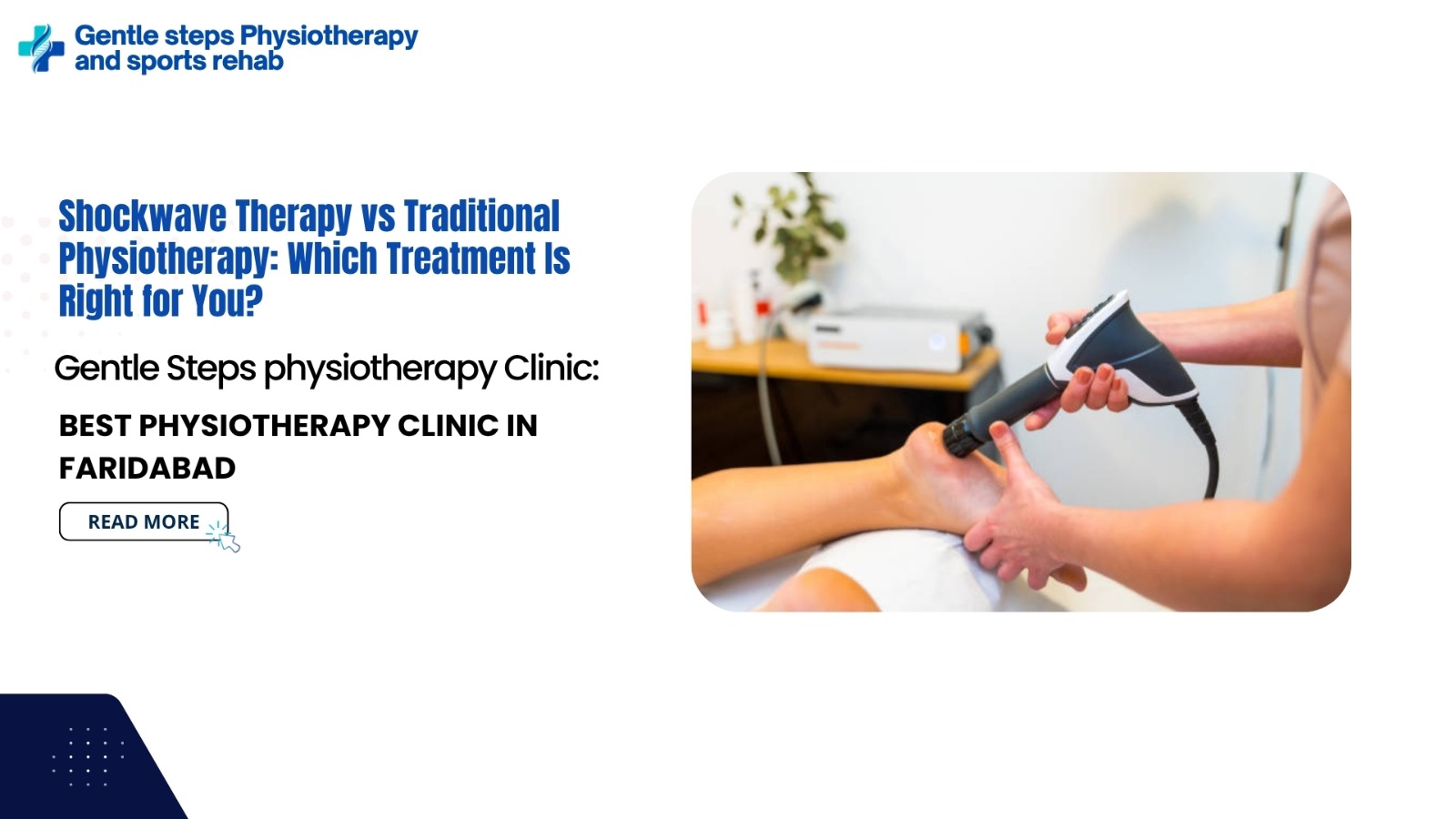
Shockwave Therapy, also known as Extracorporeal Shockwave Therapy (ESWT), is an advanced non-invasive treatment that uses acoustic waves to target specific tissues.
It is commonly considered for selected chronic tendon and soft-tissue conditions, particularly when symptoms have persisted despite conventional treatment.
Shockwave Therapy may be used for conditions such as:
Although both approaches can play an important role in rehabilitation, they serve different purposes and may be used together depending on the patient's condition.
There is no single treatment that is best for every patient. The appropriate approach depends on the diagnosis, severity of symptoms, duration of the problem, physical activity level, and rehabilitation goals.
In many cases, Shockwave Therapy can be used as a complementary treatment alongside exercise-based physiotherapy rather than as a replacement for rehabilitation.
In many cases, Shockwave Therapy can work best when combined with a structured physiotherapy rehabilitation program. While Shockwave Therapy may help manage pain and support the healing response, therapeutic exercises help restore strength, flexibility, movement, and function.
For example, a patient with tennis elbow may require:
Similarly, an athlete recovering from a tendon injury may benefit from:
Shockwave Therapy may be considered after a proper physiotherapy assessment for patients experiencing:
However, Shockwave Therapy is not appropriate for every condition. A detailed assessment is important to identify the underlying cause of your symptoms and determine whether it is suitable for you.
Exercise-based physiotherapy remains an essential part of rehabilitation for many conditions. It can be particularly important when the main goals are to restore muscle strength, improve joint mobility, correct movement patterns, improve balance, or return to sports and daily activities.
Your rehabilitation program may include:
At Gentle Steps Physiotherapy & Sports Rehab , Sector 87, Faridabad, we combine modern physiotherapy technology with evidence-based rehabilitation to provide personalized care.
Our rehabilitation services include:
Our goal is to identify the cause of your problem, reduce symptoms, restore movement and strength, and help you return safely to your normal activities.
Two people with the same type of pain may require completely different treatment approaches. The right combination of therapy, exercise, activity modification, and rehabilitation depends on your individual condition.
A physiotherapy assessment helps determine whether Shockwave Therapy, traditional physiotherapy, or a combination of both is most appropriate for your recovery.
