

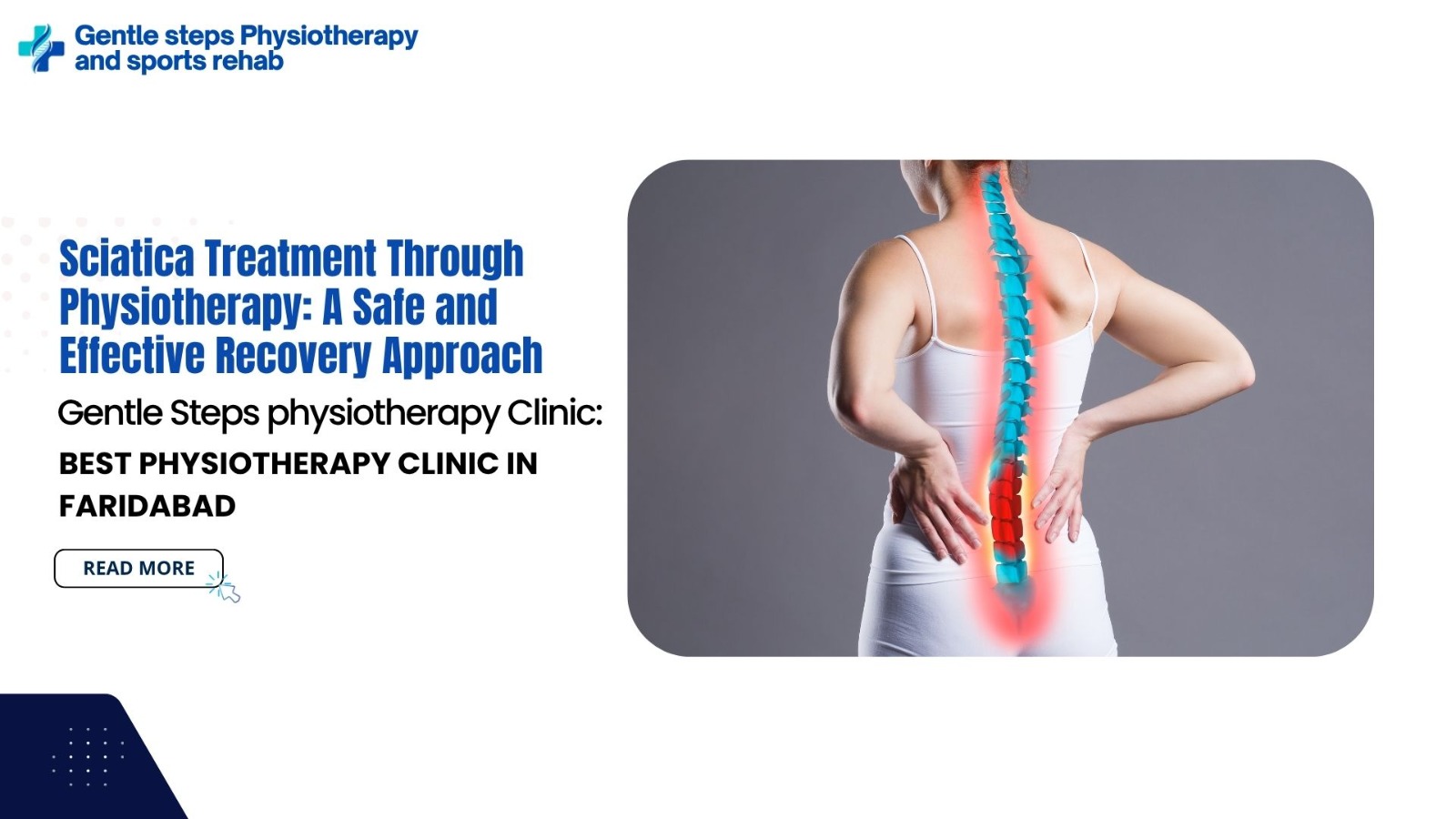
Sciatica is a common condition that causes pain radiating from the lower back into the buttock and down the leg. It can make sitting, standing, walking, climbing stairs, and even sleeping uncomfortable. Although the pain can be severe, many cases of sciatica improve significantly with the right physiotherapy treatment.
If you are looking for Sciatica Treatment in Faridabad, Gentle Steps Physiotherapy and Sports Rehab offers evidence-based rehabilitation programs designed to reduce pain, improve mobility, strengthen supporting muscles, and help patients safely return to their daily activities.
Located near SRS Royal Hills, SRS Pearl, Sector 87, Neharpar Faridabad, Gentle Steps Physiotherapy and Sports Rehab specializes in spine rehabilitation, sciatica physiotherapy, lower back pain treatment, slipped disc rehabilitation, and functional recovery.
Sciatica occurs when the sciatic nerve becomes irritated or compressed. The sciatic nerve is the largest nerve in the body and runs from the lower back through the buttocks and down each leg.
Sciatica itself is not a disease—it is a symptom of an underlying spinal or muscular condition. Identifying the exact cause is essential for choosing the most effective treatment.
Several conditions can place pressure on or irritate the sciatic nerve, including:
A detailed physiotherapy assessment helps identify the root cause of your symptoms and guides the most appropriate rehabilitation plan.
Sciatica symptoms can vary depending on the severity of nerve irritation. Common symptoms include:
Seek immediate medical attention if your symptoms are accompanied by severe muscle weakness, loss of bladder or bowel control, or numbness around the groin area, as these require urgent medical evaluation.
Early physiotherapy can help reduce nerve irritation, improve spinal mobility, prevent muscle weakness, and lower the risk of long-term or recurring sciatica. Starting treatment early often leads to a quicker and more comfortable recovery.
Physiotherapy is one of the safest and most effective non-surgical treatments for sciatica. Rather than simply relieving pain temporarily, physiotherapy focuses on reducing nerve irritation, improving spinal mobility, strengthening supporting muscles, and preventing future episodes.
At Gentle Steps Physiotherapy and Sports Rehab, every rehabilitation program is personalized according to your diagnosis, symptoms, lifestyle, and recovery goals.
Every treatment begins with a detailed assessment to identify the exact cause of your sciatica and understand how it affects your daily activities.
Our physiotherapists assess:
This comprehensive evaluation helps create a personalized rehabilitation plan for safe and effective recovery.
During the initial stage of treatment, the primary goal is to reduce pain, muscle tightness, and nerve irritation while improving comfort during movement.
Depending on your condition, treatment may include:
Gentle stretching and mobility exercises improve movement of the lower back, hips, and pelvis while reducing stiffness and pressure around the sciatic nerve.
Better mobility allows patients to sit, stand, bend, and walk with greater comfort.
Specific nerve mobilization (nerve gliding) exercises may help improve the movement of the sciatic nerve and reduce irritation in suitable patients. These exercises should always be performed under the guidance of a qualified physiotherapist.
Strong abdominal, back, and hip muscles provide better support to the spine and reduce stress on the lower back, helping decrease the chances of recurrent sciatica.
Rehabilitation commonly focuses on strengthening:
Poor sitting posture and improper lifting techniques are common contributors to sciatica. Physiotherapists provide practical advice to reduce stress on the lumbar spine during work and daily activities.
Guidance may include:
As pain decreases, rehabilitation progresses toward restoring normal daily activities such as walking, bending, lifting, climbing stairs, driving, exercising, and returning to work safely.
Along with physiotherapy, following healthy lifestyle habits can help reduce symptoms and prevent recurrence.
You should seek professional evaluation if you experience:
Early physiotherapy intervention often shortens recovery time and helps prevent chronic nerve pain.
Gentle Steps Physiotherapy and Sports Rehab in Greater Faridabad provides personalized, evidence-based rehabilitation for sciatica, slipped disc, lower back pain, and spine-related conditions.
Our rehabilitation approach includes:
Our goal is to reduce pain, restore mobility, improve spinal health, and help every patient return to an active, pain-free lifestyle.
Physiotherapy can help many people recover from sciatica by reducing pain, improving spinal mobility, strengthening supporting muscles, and addressing the underlying cause of nerve irritation. Recovery depends on the specific condition causing your symptoms and your commitment to rehabilitation.
For many patients, gentle walking is beneficial as it helps improve circulation, reduces stiffness, and supports recovery. However, the duration and intensity should be based on your symptoms and guided by your physiotherapist.
Recovery time varies depending on the cause and severity of sciatica. Mild cases may improve within a few weeks, while conditions such as a slipped disc or spinal stenosis may require a longer rehabilitation program.
Yes. Sciatica may recur if contributing factors such as poor posture, prolonged sitting, weak core muscles, or improper lifting techniques are not addressed. Regular exercise and good spinal habits help reduce the risk of recurrence.
In many cases, yes. Structured physiotherapy helps relieve symptoms, improve function, and may reduce the need for surgery. However, severe nerve compression or progressive neurological symptoms should always be evaluated by a spine specialist.
Sciatica can significantly affect your daily life, but early diagnosis and the right physiotherapy program can make a remarkable difference. By reducing nerve irritation, improving spinal mobility, strengthening supporting muscles, and correcting posture, physiotherapy helps patients recover safely and confidently.
Consistent rehabilitation, healthy lifestyle habits, and regular exercise are essential for long-term recovery and reducing the chances of future episodes of sciatica.
If you are looking for Sciatica Treatment in Faridabad, Sciatica Physiotherapy, Lower Back Pain Treatment, Slipped Disc Rehabilitation, Spine Rehabilitation, or the Best Physiotherapy Clinic in Greater Faridabad, Gentle Steps Physiotherapy and Sports Rehab provides personalized, evidence-based rehabilitation programs to reduce pain, restore movement, improve spinal health, and help you return to your everyday activities without discomfort.
Our experienced physiotherapists combine detailed clinical assessment, manual therapy, nerve mobilization techniques, core strengthening, posture correction, ergonomic education, and functional rehabilitation to help every patient achieve long-term pain relief and better quality of life.
