

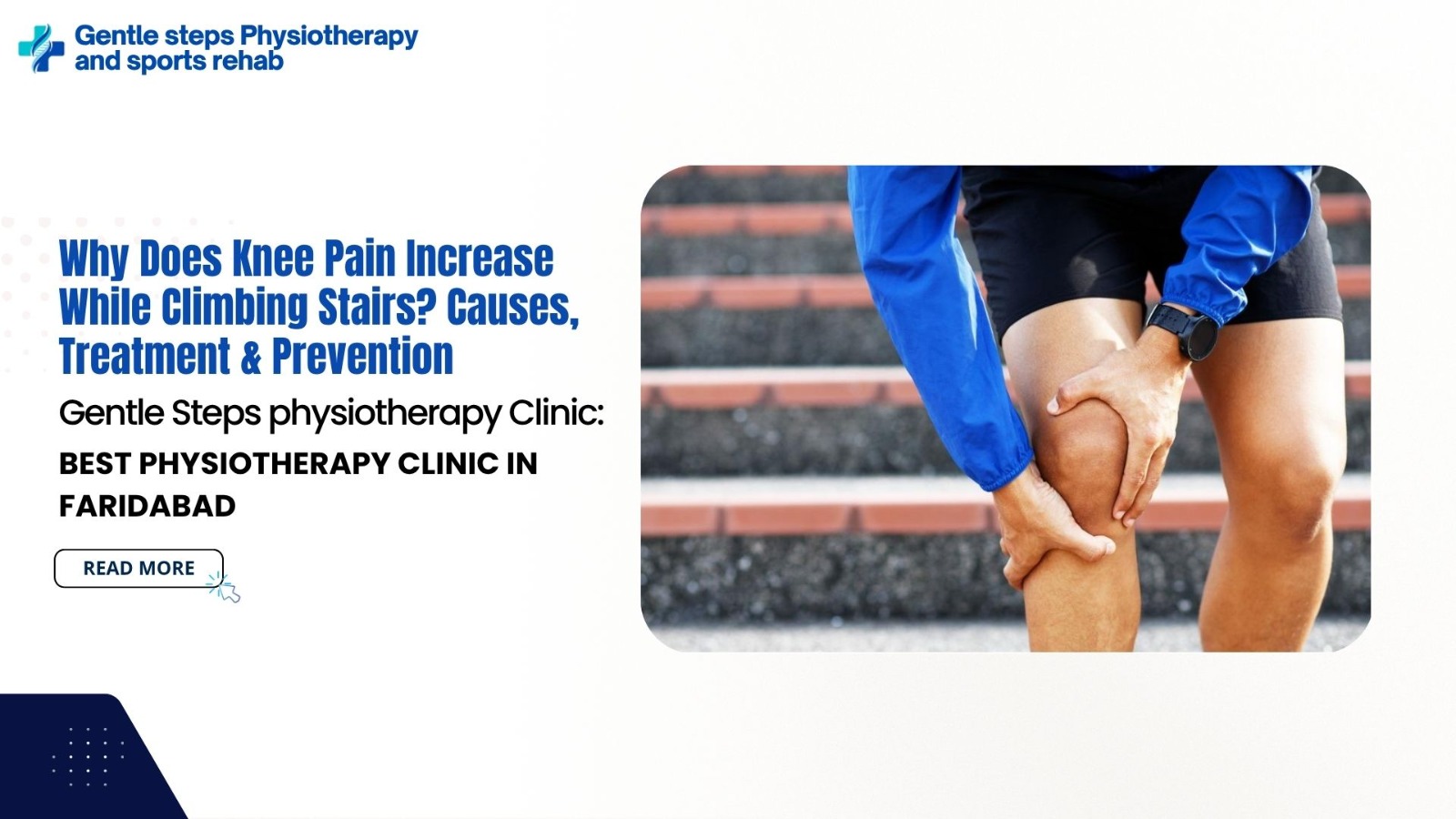
Do you experience sharp or aching knee pain every time you climb or descend stairs? You're not alone. Knee pain while using stairs is a common complaint among adults, athletes, and senior citizens. While it may seem like a minor issue initially, it can indicate an underlying knee problem that requires proper evaluation and treatment.
If you are looking for Knee Pain Treatment in Faridabad, Gentle Steps Physiotherapy and Sports Rehab provides personalized rehabilitation programs to identify the root cause of pain and restore comfortable, pain-free movement.
Located near SRS Royal Hills, SRS Pearl, Sector 87, Neharpar Faridabad, Gentle Steps Physiotherapy and Sports Rehab offers evidence-based physiotherapy care for knee pain, sports injuries, arthritis, post-surgical rehabilitation, and mobility improvement.
When you climb stairs, your knee joint experiences significantly more force than it does during normal walking. Depending on the activity, the knee may bear three to five times your body weight, placing additional stress on the cartilage, muscles, ligaments, and kneecap.
If any of these structures are weak, injured, inflamed, or degenerative, climbing stairs can become painful and difficult.
Osteoarthritis is one of the most common causes of knee pain, especially in older adults. As the protective cartilage wears away, bones begin to rub against each other, leading to pain, stiffness, and swelling.
Common Symptoms:
• Pain while climbing stairs
• Morning stiffness
• Swelling around the knee
• Difficulty standing after prolonged sitting
This condition develops when the kneecap does not move smoothly over the thigh bone during movement.
Common Symptoms:
• Pain around or behind the kneecap
• Pain while climbing or descending stairs
• Discomfort after prolonged sitting
• Clicking or grinding sensation
The quadriceps muscles play a major role in supporting and stabilizing the knee joint. Weakness in these muscles increases stress on the knee during stair climbing and other daily activities.
A torn meniscus can cause knee pain, swelling, locking, and difficulty using stairs, particularly after sports injuries or twisting movements.
ACL, PCL, MCL, or LCL injuries may cause instability, weakness, and discomfort while climbing or descending stairs.
Inflammation of the patellar tendon or quadriceps tendon can lead to pain during activities involving repeated knee bending, such as stair climbing.
You should consult a physiotherapist if you experience:
Early treatment can prevent the condition from worsening and help restore normal function faster.
Physiotherapy focuses on identifying and treating the underlying cause of knee pain rather than simply masking symptoms.
Your physiotherapist may evaluate:
Based on the assessment findings, a personalized treatment plan is created according to your condition, symptoms, and recovery goals.
Treatment may include various physiotherapy techniques aimed at reducing pain, inflammation, and discomfort.
Targeted rehabilitation exercises help strengthen the muscles that support and protect the knee joint.
Improved muscle strength reduces stress on the knee joint, improves stability, and enhances overall function during daily activities.
Stretching tight muscles improves flexibility, increases joint mobility, and helps reduce discomfort while climbing stairs.
Balance exercises improve stability, coordination, and confidence while walking, climbing stairs, and performing everyday movements. This is particularly important for older adults and individuals recovering from injuries.
Seek professional help if:
Early physiotherapy intervention often leads to faster recovery, reduced pain, and better long-term outcomes.
Gentle Steps Physiotherapy and Sports Rehab in Greater Faridabad provides evidence-based rehabilitation programs for:
Our personalized treatment programs focus on reducing pain, improving strength, restoring mobility, and helping patients return safely to their daily activities, fitness routines, and sports.
Occasional discomfort after strenuous activity may occur, but persistent knee pain while climbing stairs is not considered normal and should be evaluated by a healthcare professional.
Many knee conditions improve significantly with physiotherapy, especially when treatment begins early. However, severe arthritis or advanced injuries may still require surgical consultation.
Not always. Depending on your condition, your physiotherapist may recommend modifying activities rather than completely avoiding stairs. Proper rehabilitation can help reduce pain and restore confidence.
Knee pain while climbing stairs is often a sign that your knee needs attention. Whether the cause is osteoarthritis, muscle weakness, a sports injury, ligament damage, or a meniscus problem, early diagnosis and physiotherapy can make a significant difference in recovery.
If you are searching for the Best Physiotherapy Clinic in Faridabad, Knee Pain Physiotherapy in Faridabad, Sports Injury Rehabilitation in Faridabad, or ACL Rehabilitation in Faridabad, Gentle Steps Physiotherapy and Sports Rehab is committed to helping you move comfortably and confidently with personalized, evidence-based care.
