

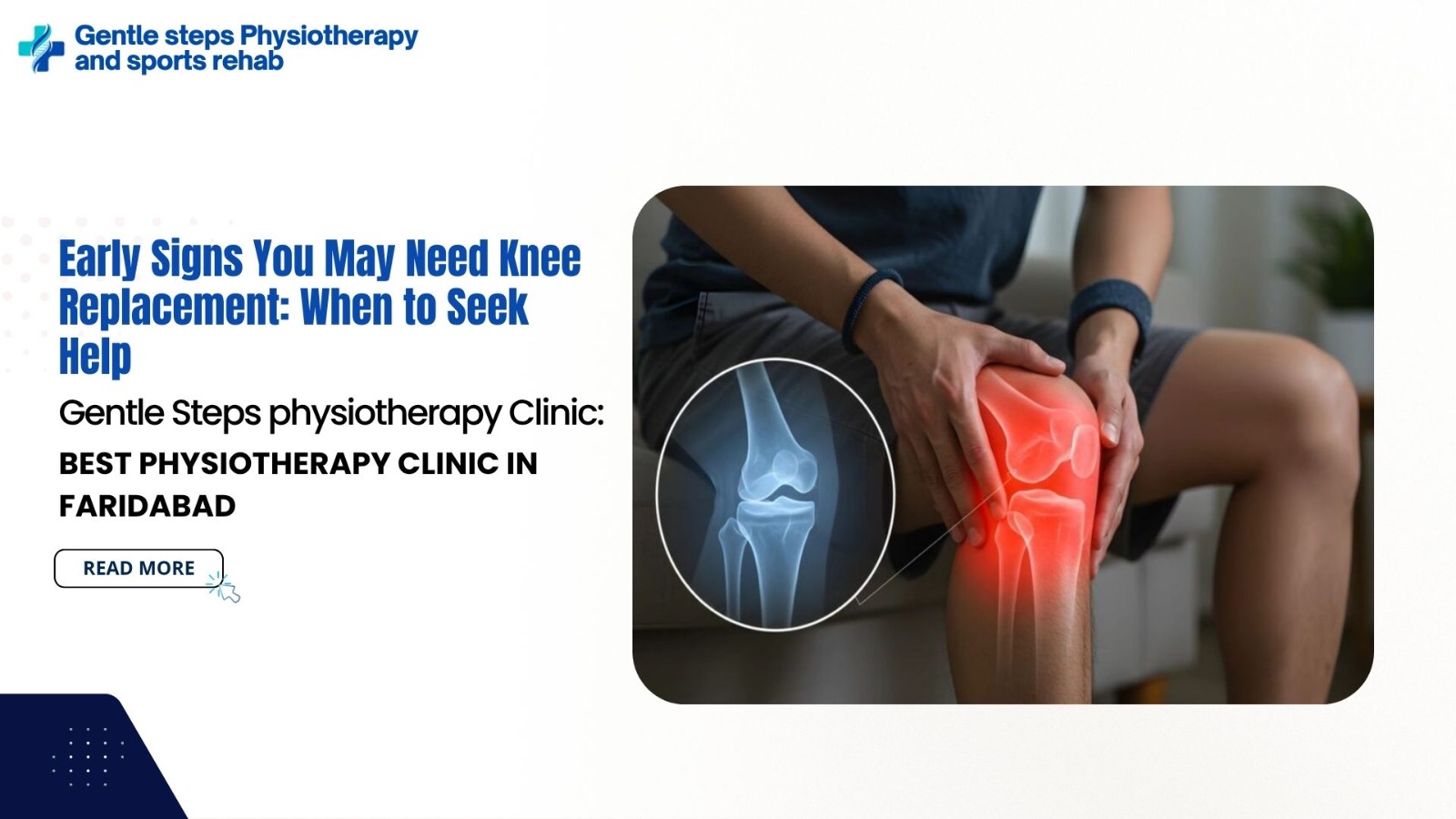
Knee pain is one of the most common musculoskeletal problems affecting adults, especially after the age of 45. While many knee conditions can be successfully managed with physiotherapy, medications, exercise, and lifestyle modifications, some patients eventually develop severe joint damage that may require knee replacement surgery.
Recognizing the early warning signs can help you seek the right treatment before the condition significantly affects your quality of life. If you are looking for Knee Pain Treatment or Pre-Knee Replacement Physiotherapy in Faridabad, Gentle Steps Physiotherapy and Sports Rehab provides evidence-based rehabilitation programs to reduce pain, improve mobility, and support recovery before and after surgery.
Located near SRS Royal Hills, SRS Pearl, Sector 87, Neharpar Faridabad, Gentle Steps Physiotherapy and Sports Rehab helps patients understand their knee condition, manage symptoms conservatively whenever possible, and prepare for the best possible surgical outcomes when needed.
Knee replacement surgery, also known as Total Knee Replacement (TKR), is a procedure where damaged portions of the knee joint are replaced with artificial implants. It is commonly recommended for patients with advanced osteoarthritis, rheumatoid arthritis, severe cartilage damage, or long-standing knee deformities.
The primary goals of knee replacement surgery are:
Not every person with knee pain requires surgery. However, certain symptoms may indicate advanced joint damage and should be evaluated by an orthopedic specialist.
If your knee pain continues for several months despite proper treatment, it may indicate significant joint degeneration.
Pain may continue even after trying:
Patients often experience pain:
Walking short distances, standing while cooking, shopping, or performing daily household activities may become increasingly difficult as knee arthritis progresses.
Many patients notice:
A stiff knee, especially in the morning or after prolonged sitting, may indicate worsening arthritis.
Severe stiffness can cause:
As osteoarthritis progresses, the alignment of the knee may gradually change, causing visible deformity.
Common deformities include:
Visible deformity often indicates advanced cartilage loss and significant joint wear.
Recurrent swelling after mild activity may indicate ongoing inflammation inside the knee joint.
If your knee frequently becomes:
It is important to seek professional evaluation.
Knee replacement may be considered when pain begins interfering with routine daily life.
Common activities affected include:
When pain limits your independence, further orthopedic evaluation becomes important.
Knee pain that disturbs sleep or continues even while resting may indicate advanced joint damage.
Warning signs include:
Difficulty bending or straightening the knee can significantly affect walking, sitting, climbing stairs, and daily mobility.
Limited knee movement may make it difficult to:
Patients with advanced osteoarthritis often describe grinding, clicking, or crackling sounds along with the feeling that the bones are rubbing together during movement.
Although sounds alone do not always indicate surgery, they become more significant when combined with persistent pain, stiffness, and limited movement.
Physiotherapy is highly effective for many patients with knee osteoarthritis. However, if you have already completed structured rehabilitation, strengthening exercises, weight management, pain management, and activity modification without significant improvement, knee replacement may be discussed with an orthopedic surgeon.
Knee replacement surgery is generally recommended when conservative treatment is no longer effective and the knee joint has sustained significant damage.
Knee replacement is commonly considered for:
Yes. Pre-operative physiotherapy, commonly known as Prehabilitation (Prehab), plays an important role in preparing patients for surgery.
A structured prehabilitation program helps:
Patients who begin physiotherapy before surgery often experience better mobility, improved muscle strength, and smoother post-operative recovery.
Knee replacement surgery is only one part of the recovery process. Physiotherapy is essential for regaining strength, flexibility, balance, and confidence after surgery.
Post-operative rehabilitation focuses on restoring normal movement and helping patients safely return to daily activities.
At Gentle Steps Physiotherapy and Sports Rehab in Greater Faridabad, we provide structured rehabilitation programs after Total Knee Replacement (TKR) to help patients regain mobility, strength, and confidence throughout every stage of recovery.
Early evaluation can prevent further joint damage and help determine whether conservative treatment is still appropriate or if surgical consultation is required.
You should seek professional evaluation if you experience:
Early diagnosis allows healthcare professionals to recommend the most appropriate treatment plan before the condition progresses further.
Surgery is not always the first choice. Many patients benefit significantly from a comprehensive conservative treatment program, especially when intervention begins early.
Depending on your condition, treatment may include:
These treatments often help reduce pain, improve function, and delay the need for knee replacement surgery.
Gentle Steps Physiotherapy and Sports Rehab in Greater Faridabad provides evidence-based rehabilitation programs for patients suffering from chronic knee pain, osteoarthritis, and post-surgical conditions.
We provide personalized care for:
Our goal is to reduce pain, improve mobility, restore muscle strength, and help every patient make the right treatment decision at the right time.
No. Most cases of knee pain can be managed successfully with physiotherapy, exercise, weight management, lifestyle modifications, and appropriate medical treatment. Knee replacement is generally recommended only when severe joint damage significantly affects daily life and conservative treatment is no longer effective.
Yes. In many patients with knee osteoarthritis, physiotherapy helps reduce pain, improve muscle strength, increase joint mobility, and enhance walking ability. Early rehabilitation may delay the need for surgery and improve overall knee function.
Knee replacement is one of the most commonly performed orthopedic procedures worldwide and is generally considered safe when recommended for the right patient. Following a structured rehabilitation program after surgery plays a major role in achieving successful outcomes.
Recovery varies from person to person. Most patients begin walking with support within a few days after surgery, while complete recovery may take several months. Regular physiotherapy is essential to regain strength, flexibility, balance, and confidence during this period.
In many cases, yes. Early physiotherapy helps improve muscle strength, reduce joint stress, relieve pain, and improve function. Although it cannot reverse severe cartilage damage, it may delay or even prevent surgery for many individuals with mild to moderate knee osteoarthritis.
Knee replacement is not the first solution for every knee problem. However, persistent pain, stiffness, swelling, deformity, difficulty walking, and reduced mobility should never be ignored. Recognizing these early warning signs allows timely evaluation and appropriate treatment before the condition worsens.
Whether your goal is to avoid surgery through conservative treatment or recover successfully after Total Knee Replacement, the right rehabilitation program can make a significant difference in your quality of life.
If you are searching for Knee Pain Treatment in Faridabad, Knee Osteoarthritis Physiotherapy, Pre & Post Knee Replacement Rehabilitation, or the Best Physiotherapy Clinic in Greater Faridabad, Gentle Steps Physiotherapy and Sports Rehab offers personalized, evidence-based rehabilitation programs designed to reduce pain, restore mobility, improve strength, and help you return safely to your daily activities.
Our experienced physiotherapy team is committed to providing patient-centered care using modern rehabilitation techniques, individualized exercise programs, and long-term joint protection strategies to help you stay active and independent.
